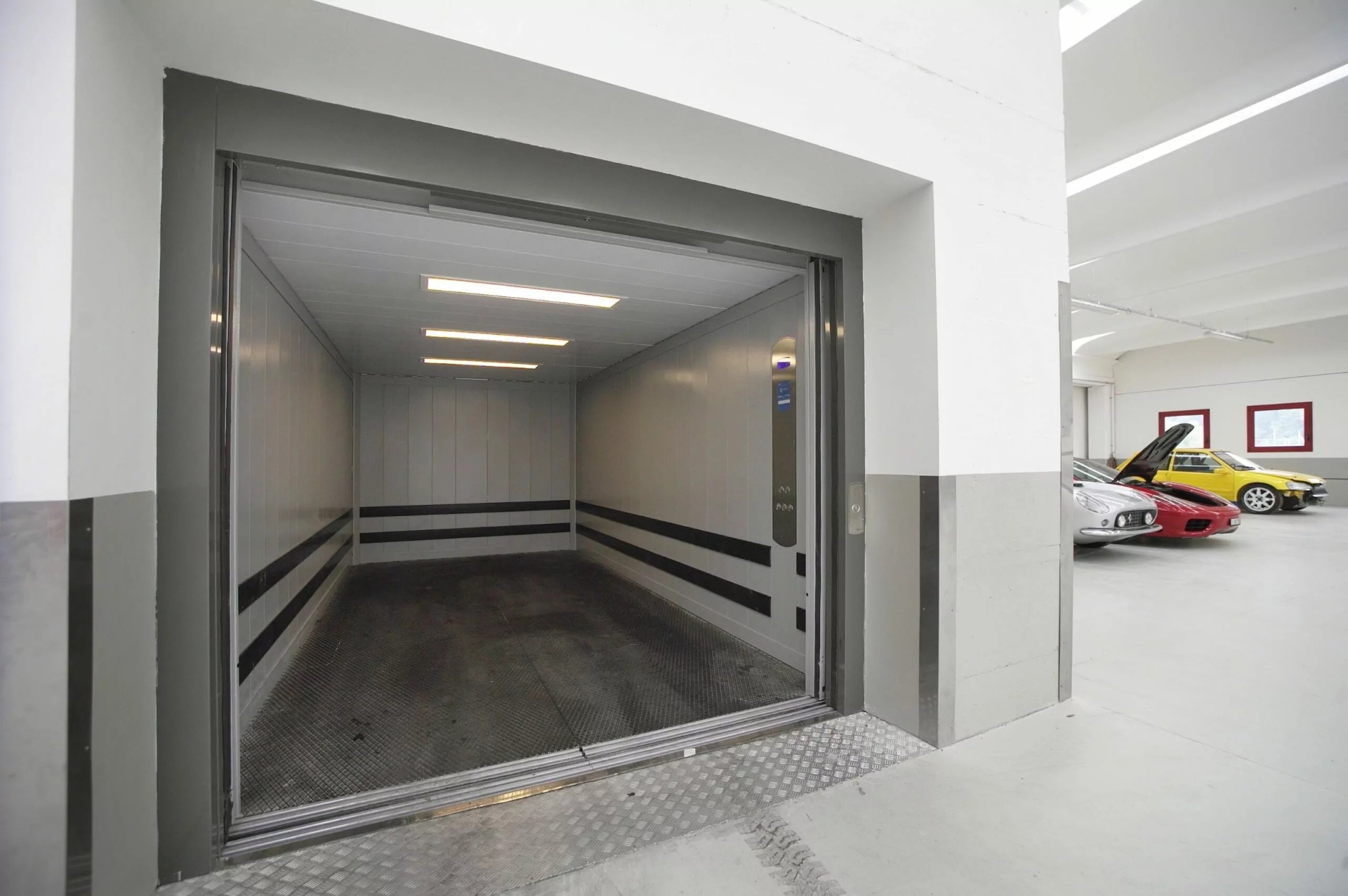
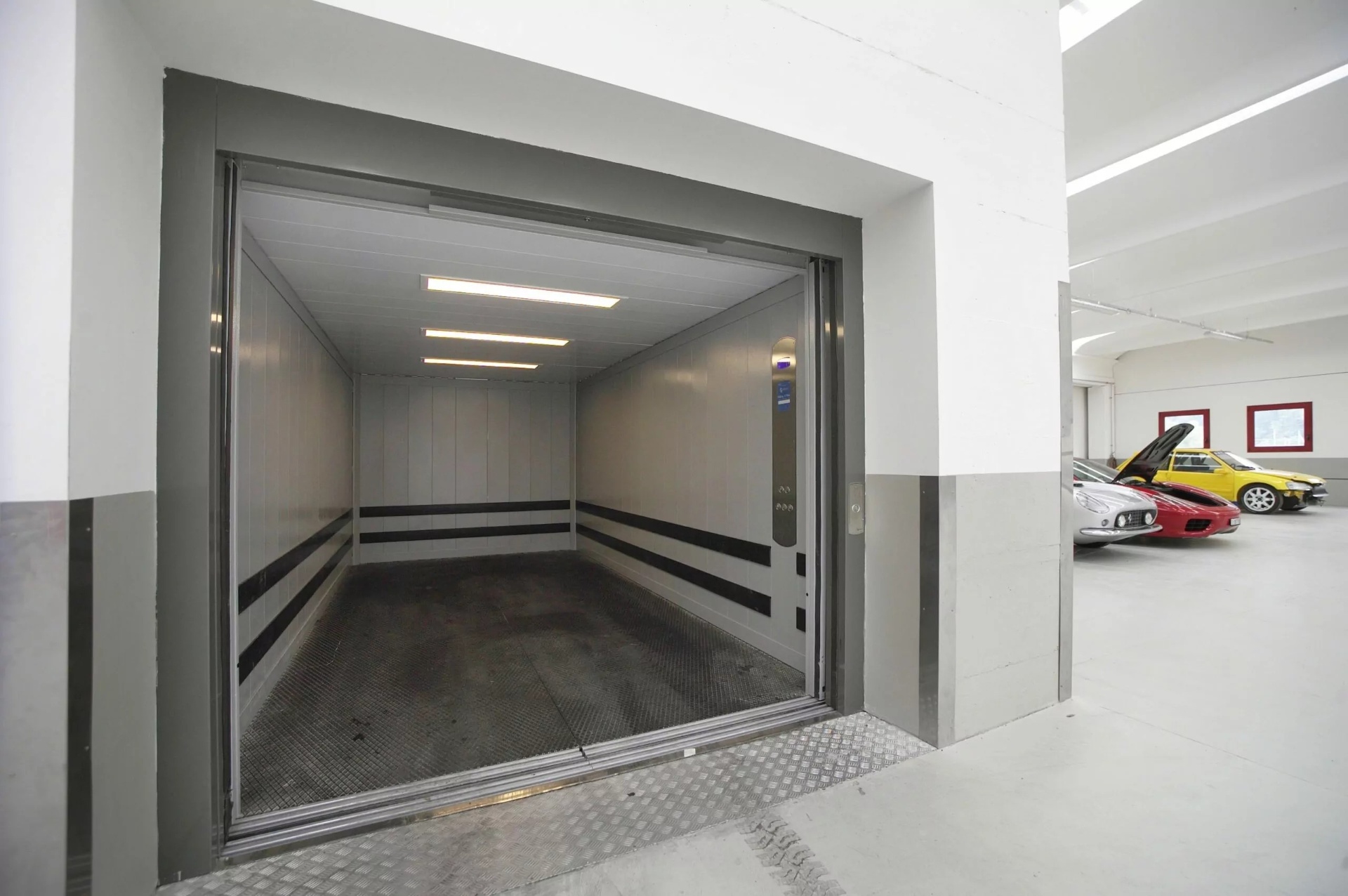
Car lift in a residential setting
Over 20 dB reduction by acting solely on the platform's lateral anchors.
The challenge
The intervention took place at a hydraulic vehicle lift installation in Madrid, where the platform is raised by a hydraulic piston and guided through lateral anchors attached to the building's structural walls.
Although in these systems the main acoustic impact is usually associated with vibratory transmission from the piston through oil injection, in this case the problem originated from a slight swaying of the platform during vehicle entry and exit. Airborne transmission was practically non-existent, even standing on the platform itself; however, the movement was structurally amplified and propagated through building elements, causing significant disturbance in the adjacent dwelling.
The technical analysis revealed a particularly complex situation: one side wall was predominantly concrete, while the other consisted of hollow brick masonry with lower mass and greater vibratory susceptibility. This asymmetry conditioned the structural transmission and made the intervention more delicate. Installing a fully decoupled auxiliary structure was not viable from a technical and safety standpoint.
The solution
The solution focused on the critical transmission point: the lateral anchors. A specific anti-vibration system was designed and installed at the joints between the platform and the walls, successfully interrupting the direct transmission of vibratory energy to structural elements connected to the dwelling.
The result
Subsequent measurements confirmed a reduction of over 20 dB in the noise level perceived inside the adjacent dwelling, effectively resolving the problem without compromising the lift's stability or safety. This project demonstrates how, in structural vibration problems, precise control of the transmission point can be far more effective than global or oversized interventions.
Related projects
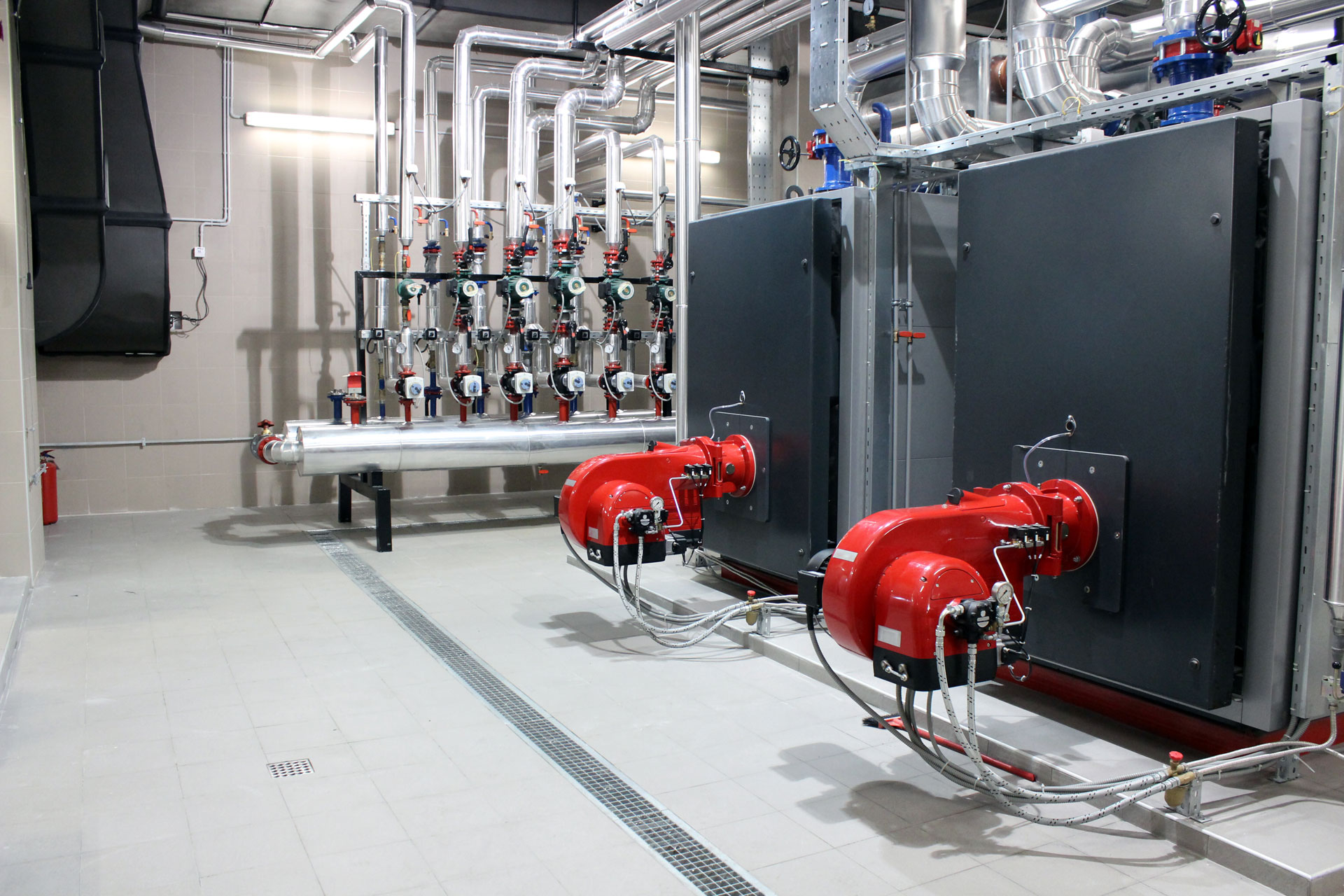
Boiler room adjacent to a bedroom: judicial resolution
95% of the problem was not airborne noise but structural transmission. A precise diagnosis closed the legal case.
View project →
Residential buildings affected by railway vibrations
Three buildings protected by SNA while the rest of the area accumulates non-compliance due to train vibrations.
View project →
Rooftop acoustic insulation on an exclusive Madrid building
Modular acoustic screens for rooftop extractors and HVAC systems on a landmark building.
View project →